
THE HEALTHCARE TALENT OUTLOOK
2026 IS THE YEAR OF THE TALENT PIPELINE
Insights from 17 Industry Leaders
2026 is a healthcare workforce breaking point:
- Federal loan caps shrink graduate pipelines before students ever apply
- Burnout and attrition remove experienced clinicians faster than programs can replace them
- AI reshapes clinical roles faster than health systems can reskill
- “School deserts” block access to training across entire regions, even where demand is highest
This report brings together 17 industry leaders, real data, and policy analysis to break down what that shift means — and the three pipeline moves health systems are making now to protect access to care in 2026 and beyond.
Get the Report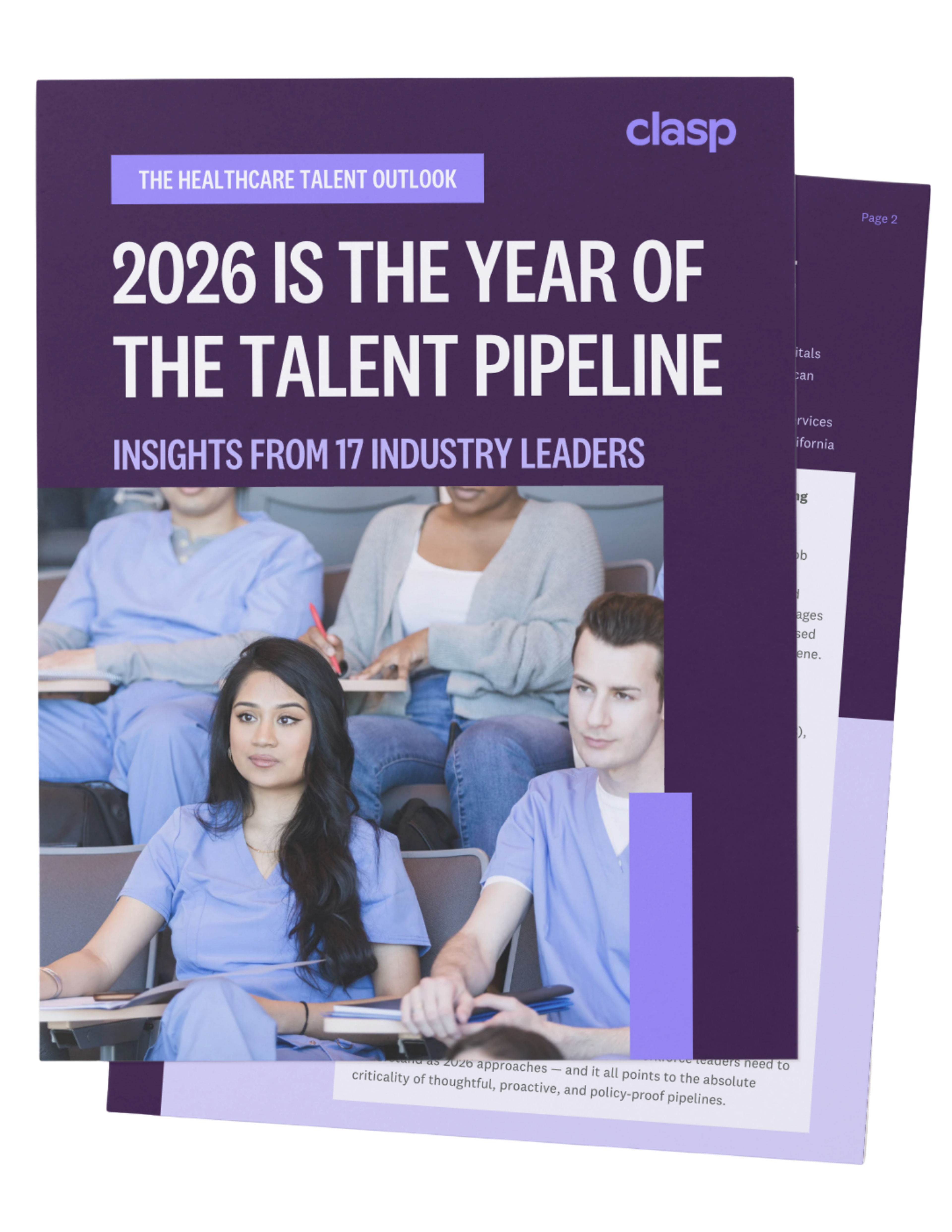
In the Report
If you are responsible for keeping care moving, this report is required reading.
under proposed federal loan caps
due to financial stress
lack a single allied health training program
Employers can’t recruit their way out of this with heftier sourcing or bigger sign-on bonuses.

Tess Michaels
Organizations must move beyond traditional hiring models and embrace smarter, data informed, relationship-driven recruitment strategies.

Deborah Visconi
The biggest force shaping healthcare talent won’t just be AI itself — it’ll be the clinicians and administrators who are able to build their companion tools.

David Sylvan
In 2026, the healthcare talent landscape will be shaped most by how effectively hospitals collaborate with education and workforce partners to build sustainable pipelines that can withstand ongoing shortages.

Teri Hollingsworth
& more insights from 17 leading healthcare organizations
Get the Report
Want to Talk Through What This Means for Your System?
Clasp helps healthcare employers operationalize pipeline strategy — engaging clinicians earlier, sharing financial risk upstream, and improving multi-year retention in hard-to-fill roles — through ROTC-inspired student loan repayment programs.
Book a free strategy call with our workforce experts.
Book a Strategy Call Today
Ready to dive deeper? Join Tess Michaels and guest leaders on January 23 for a live discussion unpacking the report’s findings and what they mean for 2026 workforce planning.
→ Register for the webinar