How to Graduate as an OT, PT, or SLP Without Spending a Decade Paying Off Your Loans
Nobody warns you about the math until it's too late.
You chose OT, PT, or SLP because you wanted to help people. You spent years in class, hours in clinical rotations, and more money than you want to think about on a degree that genuinely matters. And now, somewhere between your last fieldwork placement and graduation, the student loan repayment calculator shows you a monthly payment that makes your stomach drop.
You're not alone. The average OT graduate carries over $80,000 in student loan debt. For DPTs, it's closer to $100,000. SLPs aren't far behind. And with federal loan policy shifting in ways that make forgiveness programs less reliable than they used to be, a lot of students are realizing that "just figure it out after graduation" isn't actually a plan.
Here's what most therapy students don't know: employers exist who contribute toward your student loan repayment — on top of your salary — as part of your benefits package.
Not a sign-on bonus. Not a forgiveness program that requires 10 years of qualifying payments. Employer contributions applied to your outstanding loan balance through a platform called Clasp, while you work.
Employer Loan Repayment: What It Is and How It Works
Clasp is a platform that connects healthcare employers with therapy students before graduation. Employers on the platform commit to hiring you early — sometimes up to two years before you finish school — and agree to contribute toward your student loan repayment once you start working. Those contributions are on top of your salary, just like a 401(k) match or health insurance.
Eligible employers are offering $20,000 to $60,000 toward student loan repayment for qualifying OT and PT students, and up to $36,000 for qualifying SLP students, subject to program terms.¹
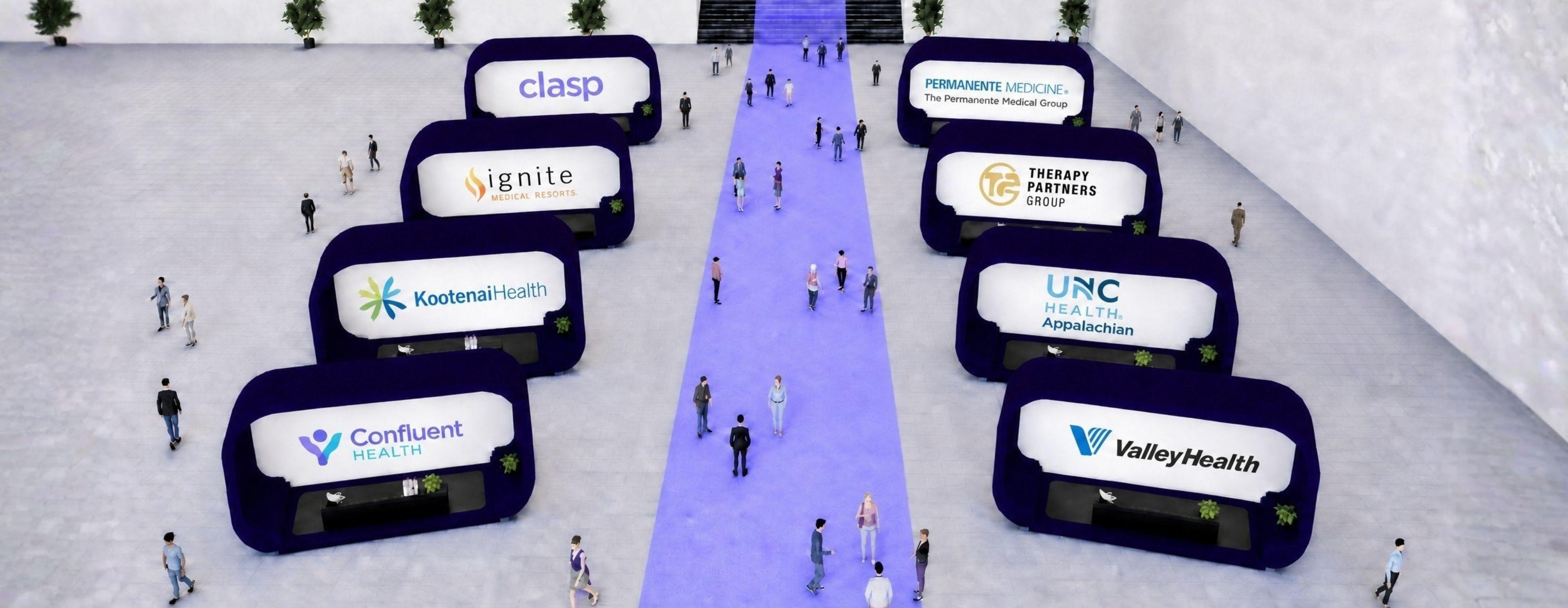
On June 23, seven of those employers [listed below] are gathering in one place for a free virtual career fair — and they're actively reviewing applications from students graduating in 2026 and 2027. Register free for the June 23 Virtual Career Fair. →
Who's Hiring
The employers attending include:
Confluent Health | OT, PT, SLP | Multiple states | Up to $36,000 (Montana) or $25,000 (all other states) over 5 years. One of the largest therapy networks in the country — 1,500+ locations — with a company-wide focus on upskilling clinicians. Strong choice if you want clinical depth and room to grow long-term.
HealthPro Heritage | PT | Up to $26,500 over 5 years. A national therapy network operating across more than 32 states, with a range of clinical settings and a focus on giving therapists the freedom to practice the way they're trained to.
Ignite Medical Resorts | OT, PT | Multiple states | Up to $60,000 over 5 years, or $35,000 over 3 years. Luxury rehab resorts with equipment most clinics don't have — VR, robotic gait trainers, anti-gravity treadmills. Flexible scheduling, subsidized childcare, and a culture built around recognizing staff.
Kootenai Health | PT | Idaho | Up to $20,000 over 3 years. Award-winning health system in North Idaho with a team culture the CHRO describes as investing in people at every stage of their career. If you want meaningful work in a place where the outdoor lifestyle is part of the deal, check out Kootenai Health.
The Permanente Medical Group | OT, SLP | California | Up to $20,000 over 2 years. Pediatric-focused roles inside the largest multi-specialty medical group in the US, serving 4.5 million members. Built-in mentorship and a dedicated career ladder for rehab professionals.
Therapy Partners Group | PT | California and Arizona | Up to $30,000 over 3 years (Bakersfield, Bay Area, Tucson) or $26,250 over 5 years (Ventura County). Therapist-led and built for clinical independence — this is the organization for PTs who want to practice on their own terms while still having a national platform behind them.
UNC Health Appalachian | PT | Boone, North Carolina | Up to $25,000 over 2 years. Three-hospital system in the Blue Ridge Mountains with an education partnership with Appalachian State University. Big-system resources, genuine small-town feel — and one of the fastest loan repayment timelines in the group.
Valley Health | OT, PT, SLP | Virginia and West Virginia | Up to $30,000 over 3 years. The largest employer in the Shenandoah Valley, with clinical settings ranging from acute care to outpatient specialty. Zero-deductible health plan, relocation assistance, and a region that consistently ranks high for quality of life.
How the Event Works
The career fair runs from 6:00–8:00 PM ET on June 23. It's completely virtual, completely free, and you don't need to show up for the full two hours — most students spend 15–30 minutes, browse the employer booths, and connect directly with recruiters through chat or short video calls.
You can ask questions about loan repayment terms, locations, what a typical first year looks like, and whether positions are available for your graduation year. Recruiters are there specifically to talk to students like you.
Why You Should Apply Before Graduation
Spots in Clasp facilitated loan repayment programs are first-come, first-served. Employers review applications on a rolling basis, and the earlier you apply, the better your chances of being selected before a cohort fills. Some students have locked in offers more than a year before graduation.
If you're a recent grad or graduating in 2026, the window is already narrow. If you're graduating in 2027, now is exactly the right time to start the conversation.
The Clasp Virtual Career Fair on June 23 is the best way to meet multiple employers at once, ask your questions directly, and figure out whether any of these programs are a fit before opportunities close.
Registration is free and takes about a minute.
Register for the Virtual Career Fair.
¹ If qualified, selected, and employed by a participating employer for a specified employment term, the employer will pay back up to a specified amount toward your eligible, synced student loans in installments via the Clasp platform. Program selection is not guaranteed. In case of voluntary employment termination or termination with cause, failure to meet the terms of your educational loan repayment agreement, or in the event you choose to leave the program at any time, you are responsible for any remaining outstanding loan balance. You are personally responsible for the financial obligations under your loan agreement(s). Any agreement between you and your employer is entirely separate from your loan obligation(s) and will not in any way offset your obligations to your lender unless payments are made by you or any other party on your behalf.
You may be subject to income tax for some or all of the loan contributions made by your employer on your behalf. Consult a tax professional if you have questions regarding the tax consequences of your employer's student loan repayment program.