Webinar Recap: What Upcoming Federal Student Loan Changes Mean for Clinical Students
Clinical graduate students across the country are facing increasing uncertainty around how they will finance their education. With major federal student loan changes scheduled to take effect in July, many future healthcare professionals are trying to understand how these updates may affect their borrowing options.
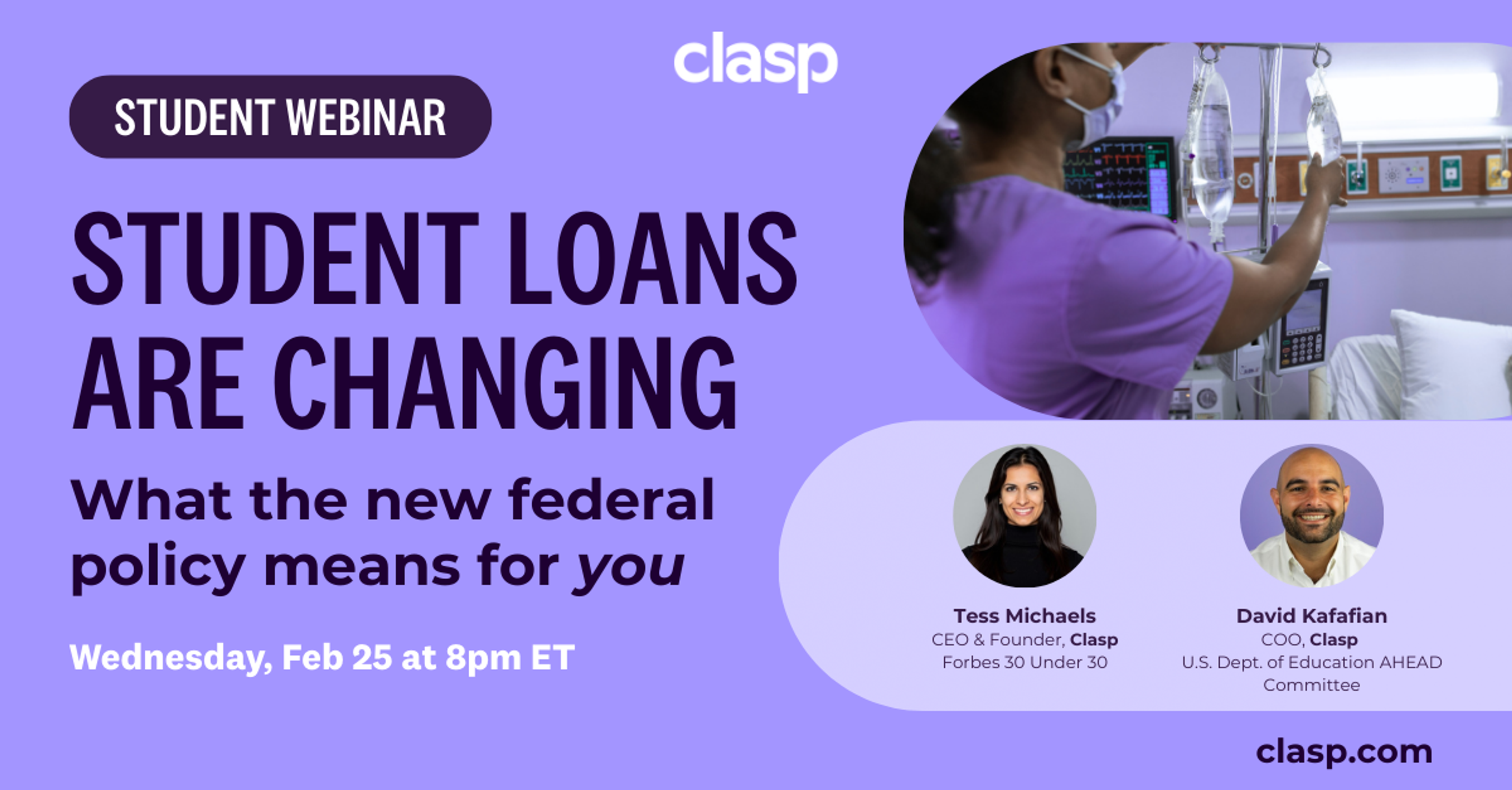
In a recent webinar hosted by Clasp, our team discussed upcoming federal loan policy changes, how they may impact clinical students, and what steps students can take now to prepare. The conversation focused on the challenges ahead—but also the opportunities available through employer-sponsored loan repayment programs.
Below are the key insights and takeaways from the discussion.
1. Federal Loan Limits Are Changing July 1
One of the biggest updates discussed in the webinar is the new federal loan limits taking effect on July 1. These changes could significantly impact how much students in certain graduate and clinical programs are able to borrow.
For some programs, the difference could be substantial—potentially reducing available federal funding by up to $100,000 compared to previous borrowing limits.
Because of this, it’s important for students currently applying to or enrolled in clinical programs to begin thinking about financing strategies early.
2. Degree Classification Is Creating Confusion
A major factor driving these changes is how the federal government is classifying different graduate programs.
Programs categorized as “professional degrees” may still have access to higher federal loan limits. However, other graduate healthcare programs may fall under more restrictive borrowing caps.
During the webinar, we discussed how this classification system has created confusion for both students and institutions trying to understand what funding will be available moving forward.
3. Healthcare Careers Are Still in High Demand
Despite concerns about financing, the demand for healthcare professionals continues to grow nationwide.
Programs preparing students for careers such as:
- Nursing
- CRNA (Certified Registered Nurse Anesthetists)
- Physical Therapy
- Occupational Therapy
- Physician Assistant roles
remain critical to addressing workforce shortages in hospitals and healthcare systems.
The need for these roles means strong career opportunities are still available for students entering these fields.
4. Employer Loan Repayment Programs Are Expanding
One of the most important opportunities discussed in the webinar is the growth of employer-sponsored student loan repayment programs.
Many healthcare organizations now offer loan repayment support as part of their recruitment and retention strategies. These programs can significantly reduce the financial burden students face after graduation.
Platforms like Clasp help connect clinical students with employers offering these benefits, making it easier for graduates to manage their student loan debt while launching their careers.
5. Planning Ahead Is More Important Than Ever
The biggest message from the webinar was clear: students should start planning early.
With federal loan policies evolving, students should take steps to understand their options and build a strategy for financing and repayment. This can include:
- Understanding how new loan limits apply to their program
- Exploring scholarships or additional funding sources
- Learning about employer-sponsored loan repayment programs
- Creating a repayment strategy before graduating
Taking these steps early can help students navigate changes with more confidence.
Final Thoughts
While upcoming federal loan changes may create new challenges for clinical students, they also highlight the importance of exploring additional financial support options.
Healthcare careers remain essential and in high demand—and with the right planning, students can still pursue these paths while managing the cost of their education.
Webinars like this one aim to help students better understand the evolving financial landscape and the resources available to support them.